
Digital health and the insurance sector

Technological developments in recent years have had a significant impact on areas such as finance and education, and also on how health services are delivered. Digital health solutions are increasingly common, including telemedicine, mobile apps that help people manage their health, and wearable devices that can monitor health indicators in real time.
This article explains how digital transformation has affected health care, what benefits it can offer patients, and why the insurance sector should keep up with technologies such as artificial intelligence (AI).
ÍNDICE DEL ARTÍCULO
- From digital transformation to telemedicine: a clear hierarchy
- Digital transformation in health care
- Telemedicine and its role in the evolution of the insurance sector
- Key technological innovations in digital health
- Practical applications of digital health in health insurance
- Challenges and opportunities for the insurance sector
- What agents should know when talking about digital health with clients
From digital transformation to telemedicine: a clear hierarchy
To understand how technology is affecting the health and insurance sectors, it helps to distinguish between three related but distinct concepts:
- Digital transformation: the broad process through which companies and sectors adopt technology to improve efficiency, customer experience, and their business model. It ranges from artificial intelligence to automation and data analysis.
- Digital health: the application of digital transformation specifically to health care. It includes tools such as wearable devices, mobile apps, medical AI, and remote monitoring platforms.
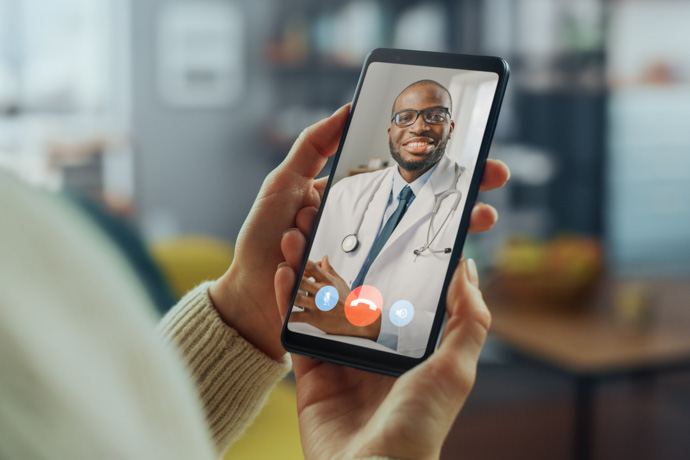
- Telemedicine: one of the most visible forms of digital health. It refers to the delivery of medical services at a distance through communication technologies, such as video calls, messaging, and digital platforms.
Digital transformation in health care
According to McKinsey & Company, digital transformation is the restructuring of an organization built on deploying technology at scale. Its aim is to change how the organization operates and delivers value to its customers, using tools such as data analysis, AI, mobile apps, and process automation, among others.
Although the concept comes from the corporate world, it also helps explain how health care delivery has been changing in recent years. Thanks to technology, for example, people no longer depend solely on in-person care and can also access health services remotely.
In health care, these changes fall under the concept of digital health. The U.S. Food and Drug Administration (FDA) describes it broadly, covering mobile health, health information technology, wearable devices, telehealth and telemedicine, and personalized medicine, as well as mobile medical apps and software that support the clinical decisions doctors make.
In other words, digital health is not limited to remote care. It covers technology tools that can support care and help diagnose and treat disease more precisely.
All of this has reshaped how insurance companies operate, and many have begun to include telemedicine tools in their policies. Their goals now include making online medical consultations available, offering medical reports and results that can be downloaded and viewed on mobile devices, and simplifying the overall patient experience.
Digital transformation has given rise to digital health, and digital health to telemedicine, a care format we examine in the next section, with a focus on its impact on the insurance industry.
Telemedicine and its role in the evolution of the insurance sector
After COVID-19 affected millions of people worldwide and social distancing became the rule for a time, telemedicine, which is part of what is known as digital health, gained prominence, and it has continued to grow since. Technological advances and the convenience of receiving a consultation from home have made this care format one of the most relevant today.
This has meant a change for everyone involved, including insurers, which have had to adapt to this new reality and meet patients’ expectations.
The change may also have benefits for insurers’ cost control and management. Telemedicine can cost less than in-person care, which may allow insurers to offer more accessible and efficient services to their clients, although the savings depend on the service and the setting.
In addition, telemedicine has allowed insurers to expand their range of services, offering virtual consultations, remote follow-up care, and even electronic prescription management. This can raise satisfaction among policyholders, who may see added value in their health policies.
The International Association of Insurance Supervisors (IAIS) uses the term InsurTech for technological innovations with the potential to transform the insurance business. Insurers that adapt to technological change and work to stay at the forefront belong to the InsurTech ecosystem, which describes digital transformation in the sector through technologies such as AI, blockchain, and predictive analytics tools.
Key technological innovations in digital health
Many technological innovations are shaping digital health. They include artificial intelligence (AI), remote monitoring devices, and blockchain technology, which some organizations are exploring to help secure the management of medical data.
A useful reference on the benefits of these technologies is the article Telemedicine for healthcare: Capabilities, features, barriers, and applications, which notes that telemedicine systems with digital health monitoring, combined with artificial intelligence and machine learning, can support more accurate diagnoses and treatment recommendations.
In other words, the care process can become more efficient and the workload of health professionals may be reduced. In addition, because large amounts of data are processed, AI tools may help flag relevant information that clinicians could overlook, always subject to review by a qualified professional.
Remote monitoring devices, such as wearables, are also enabling continuous follow-up of patients’ health.
These devices can measure data such as heart rate, blood pressure, blood glucose levels, and physical activity, and send the information to health professionals in real time. This can support the management of chronic conditions and allow timely interventions when anomalies are detected. Readings from consumer devices can differ from those of clinical equipment, so results that cause concern should be reviewed by a health professional. Symptoms such as chest pain, difficulty breathing, or sudden weakness call for emergency care, not a wait for a device alert.
There are also many mobile apps for cognitive stimulation of patients with neurodegenerative diseases. They may help support daily mental activity and quality of life, but evidence on whether they slow disease progression is limited and mixed, so they should complement medical care, not replace it.
Apps of all kinds focus on emotional well-being, physical activity, and many other areas related to people’s physical and mental health.
Blockchain is another technology associated with digital health. It is a way of keeping shared records that can be difficult to alter, and some organizations are exploring it to manage records and exchange information among insurers, providers, and laboratories. Its use in health care is still developing, and any application must protect patient privacy and comply with data protection rules.
Practical applications of digital health in health insurance
The practical applications of digital health are broad and directly related to the services that health insurance offers.
Several of these applications have already come up in this article. Today’s technology can be used to develop telemedicine platforms, offer remote medical consultations, integrate apps and wearable devices to monitor people’s health in real time, and keep a consolidated patient record.
One benefit of the last point is that insurers can track each client’s medical history and automate the analysis of large volumes of data to anticipate possible health risks and offer plans tailored to each case, with the client’s consent and in line with applicable privacy rules.
Digital tools could also help clinicians monitor risk factors for conditions such as vascular dementia, including high blood pressure, high cholesterol, and diabetes. Vascular dementia can appear suddenly after a stroke or develop gradually, and early medical evaluation and management of those risk factors can help slow its progression, but no digital tool can diagnose it on its own. Sudden confusion, trouble speaking, or weakness on one side of the body may signal a stroke and require emergency care.

Challenges and opportunities for the insurance sector
Just as digital health has advantages, it also has drawbacks. It is an approach with a lot of room to develop, so insurers face challenges in several areas.
One concerns data privacy and security, since any vulnerability can lead to misuse of data. It is therefore important to invest in strong cybersecurity measures and to follow existing regulations on digital health and the handling of patient data.
Another important point is the digital divide, because many people, especially older adults and those living in rural areas, may be less comfortable using technology. This means they can have trouble using the services available to them and may prefer in-person care.
It is also worth noting that digital health is a complement to traditional medical care, not a replacement. Its limits are clear for people who need emergency care or tests that cannot be done remotely. Anyone with symptoms that may signal an emergency should go to an emergency department or call local emergency services rather than wait for a virtual consultation.
Even so, the opportunities digital health offers are broad, and insurers should make the most of technology to improve their business model and the policyholder experience.
Insurance agents can play an active role in this, since they can directly help people who do not fully understand the benefits of digital health or who are wary of a new type of medical care service.
What agents should know when talking about digital health with clients
Clients often have questions about telemedicine and digital tools before they decide whether a health policy is right for them. Knowing the basics helps agents answer clearly and set realistic expectations.
What can telemedicine address?
Telemedicine is commonly used for general wellness visits, follow-up care and management of chronic conditions, questions about minor, non-urgent symptoms, mental health consultations, and reviewing test results. Which services are available, and whether a prescription can be issued remotely, depends on the provider and on local regulations.
What can it not replace?
It does not replace in-person care when a physical exam, a procedure, or a test that cannot be done remotely is needed, and symptoms such as abdominal pain or eye problems often need to be seen in person. A virtual consultation is not the right first step in an emergency. The U.S. Department of Health and Human Services notes that telehealth can play a role in emergency care, for example by helping decide whether a patient needs to go to an emergency department. Chest pain, difficulty breathing, signs of a stroke (sudden weakness or numbness on one side of the body, facial drooping, or trouble speaking), severe bleeding, fainting, or thoughts of self-harm call for contacting local emergency services or going to an emergency department right away.
How is client data handled?
Many clients worry about the privacy of their medical information. Agents can explain that insurers and providers are expected to follow data protection rules, and refer clients to the policy documents or the insurer for specifics. It is better not to promise levels of security that the agent cannot verify.
What if the client is not comfortable with technology?
Older adults and people with limited internet access may prefer in-person care. Agents can ask about the client’s preferences, explain the options available, and point them to the insurer’s support channels if they need help getting started.
Tips for these conversations
- Describe digital health as a complement to traditional care, not a substitute.
- Avoid diagnosing or recommending treatment. Questions about symptoms or treatment belong with a health professional.
- If a client describes symptoms that may be urgent, advise them to seek emergency care immediately instead of continuing the conversation about the policy.
- Use plain language and check that the client has understood before moving on.
Sources:
- https://www.fda.gov/medical-devices/digital-health-center-excellence/what-digital-health
- https://www.mckinsey.com/featured-insights/mckinsey-explainers/what-is-digital-transformation
- https://pmc.ncbi.nlm.nih.gov/articles/PMC8590973/
- https://deloitte.com/content/dam/Deloitte/us/Documents/financial-services/us-fsi-blockchain-in-insurance-ebook.pdf
- https://iaisweb.org/file/65625/report-on-fintech-developments-in-the-insurance-industry
- https://telehealth.hhs.gov/patients/can-i-use-telehealth-emergency-care


