

Gamification in health care: what it is and how it can help agents support their clients
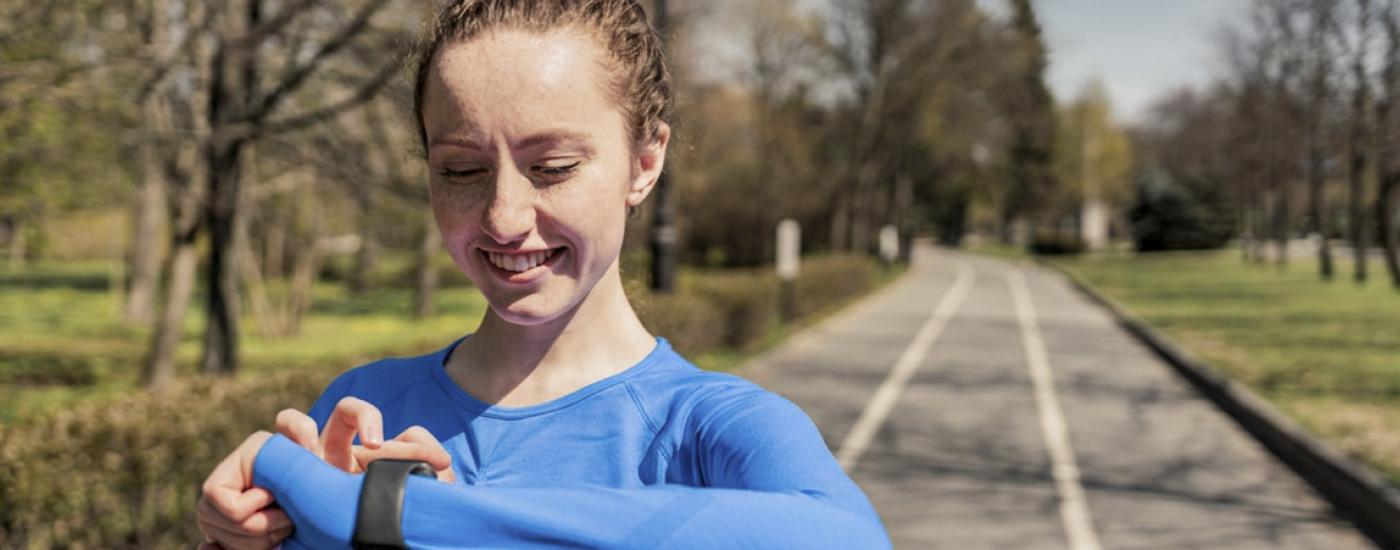
Gamification in health care means applying game mechanics (challenges, points, rewards, levels, and leaderboards) to wellness programs to motivate people to adopt and maintain healthy habits. For agents, knowing about this trend goes well beyond technological novelty: it can support more useful conversations about prevention, well-being, and available benefits throughout the relationship with the client.
The evidence is promising but still moderate: a meta-analysis of randomized trials published in eClinicalMedicine found slight improvements in physical activity and in measures of adiposity compared with apps without game elements. In insurance, the logic is that a wellness initiative can create new points of contact with the client. Its effect on health, service use, or the relationship with the insurer depends on the program’s design, participation, and context.
This article explains what gamification is, how it can influence the agent’s role as an advisor, and what agents can do today to support their clients’ habits.
Important notice: the examples in this article describe how gamification works in the insurance sector, not a specific insurer’s program. The availability of wellness programs, incentives, or related benefits varies by product, market, and policy terms. Current terms and benefits tables should always be checked before a specific benefit is discussed with a client.
ÍNDICE DEL ARTÍCULO
- What gamification in health care is and why it matters to agents
- How the agent’s role changes: from policy seller to trusted advisor
- The most common gamification mechanics
- Practical application: bringing well-being into the client relationship
- Risks and best practices: gamification is not everything
- Frequently asked questions about gamification in health care
What gamification in health care is and why it matters to agents
Research defines gamification as the use of game design elements in non-game contexts to motivate behavior change. According to a recent viewpoint article in JMIR Serious Games, when well designed, it draws on recognized behavior change techniques.

Now, why should this matter to someone who sells and manages health policies? The answer lies in the nature of the business. A large part of the risk insured (diabetes, cardiovascular disease, overweight) is directly related to lifestyle habits. Physical activity, sleep, and other habits are linked to health.
However, agents should not assess a client’s clinical or underwriting profile based on this information. And here a virtuous circle appears that is worth understanding: a client who is engaged with their health is often healthier, more satisfied, and more likely to stay.
It is worth being cautious: wellness programs aim to encourage certain healthy behaviors, but it should not be assumed that they will directly reduce claims or costs.
In this context, gamification stops being a digital ornament and becomes a tool for managing the relationship. It connects naturally with the health insurance retention strategies agents already use and with their role in prevention, because it does not sell an abstract promise: when a program exists, it supports, measures, and recognizes the client’s real progress.
How the agent’s role changes: from policy seller to trusted advisor
This is the shift agents need to take on board. The traditional model placed the agent as an intermediary at a single moment: the policy was sold, and the next relevant contact came at renewal or when a claim arose. The current model, when supported by gamification and the digital ecosystem, can turn the agent into an ongoing partner in clients’ well-being.
The contrast is clear. Traditionally, the relationship with the client centered on a few moments: signing up, renewal, and sometimes a claim. A well-designed wellness program can instead add positive points of contact between those moments.
This continuity can strengthen loyalty. Experience weighs heavily on retention: according to an Accenture survey of more than 9,700 insured consumers in the US, 52% of those who switched insurers said experience was the primary reason, and when choosing or renewing a plan, experience and access to care outweigh price.
This new role calls for different skills. Knowing the product is no longer enough; agents need to be able to explain the available wellness services and guide clients toward authorized channels, without interpreting health data. Good communication skills help clients see wellness initiatives as a benefit, not an obligation.
The skills that matter more now are:
- Getting to know the client: understanding how they care for their health, based on what they choose to share, and what they want to sustain, so that advice can be personalized and needs anticipated, without interpreting clinical data.
- Listening and explaining: describing clearly how each wellness initiative in the policy works and why it is worth taking part, without unnecessary jargon.
- Support in prevention: connecting the client’s achievements with their coverage, reinforcing the agent’s role in disease prevention through education.
- Long-term relationship management: using every contact to strengthen the bond, including reviews, renewals, and follow-ups, and to spot additional coverage needs.
The most common gamification mechanics
Not all game elements have the same effect. The available evidence is concentrated mostly on physical activity, with slight effects, as explained in eClinicalMedicine. Knowing which mechanic suits which goal lets agents explain these initiatives knowledgeably and tailor recommendations to each client profile.

These are the most common mechanics and how they apply in practice:
- Goals and immediate feedback: setting achievable goals (for example, a daily step count) and sending progress notifications helps sustain motivation. This is the basis of almost any wellness program.
- Rewards and incentives: points, discounts, or redeemable prizes, depending on the program, turn effort into a tangible benefit. They are usually used to get participation started.
- Badges and status levels: recognizing achievements with badges and tiers (bronze, silver, gold) feeds the client’s sense of progress and belonging.
- Social elements and community: challenges among friends, collaboration, and peer support foster a sense of community and accountability that boosts participation. It is worth considering whether they suit each client: not everyone wants to share their activity or compete with others.
The key message for clients is that these mechanics are not about play for its own sake but about meeting basic psychological needs (achievement, autonomy, belonging) that sustain habit change over time. That is the argument that separates a passing reward from real behavior change.
Practical application: bringing well-being into the client relationship
These ideas can help bring well-being into every stage of the sales relationship. They are conversation examples, and they should be used only to describe what the client’s policy actually includes.
Here is how they can be put into practice in the sales funnel with concrete conversations.
- When winning new clients, a well-being focus can be a differentiator if the policy includes preventive or support benefits. Instead of selling a list of coverages, the agent offers a living value proposition, for example: “This policy doesn’t just protect you if you get sick; it includes benefits that help you look after yourself. Let me explain which ones it includes.” With premium clients, a personalized, discreet approach may suit better than competitive mechanics.
- In the discovery conversation, interest in well-being can serve as an entry point. A simple question like “What do you do today to look after your health, and what would you like your insurance to help you keep up?” opens a dialogue about habits and personal goals, far more human than an argument focused only on prices and sums insured.
- At retention and renewal, regular follow-up on the client’s well-being helps: staying in touch between renewals strengthens the bond.
What agents can do today
A gamified program is not required to apply this logic. There are actions that can be put into practice today:
- Helping the client identify the preventive or wellness benefits available and the right channel to use them. When a health goal requires clinical guidance, it should be set with the appropriate professional, whether for an annual preventive checkup or an activity routine, and revisited at the next contact.
- Acknowledging their progress when they share it, as a challenge-based program would.
- Reviewing with them the preventive and wellness benefits their policy already includes and explaining how to use them.
Note: participation in any wellness initiative must be voluntary. Only the health data strictly necessary for the agent’s function should be requested or recorded, and it should not be interpreted. If the client shares clinical information or asks for medical guidance, they should be referred to a professional or an authorized channel.
Risks and best practices: gamification is not everything
It would be a mistake to present gamification as a magic solution. For a trusted advisor, credibility also depends on knowing how to handle its limits. A systematic review of gamification in e-health concluded that most of the applications analyzed achieved only short-term engagement, based on external rewards, which raises the challenge of sustaining participation over time.
That is why it is worth keeping a few best practices in mind before recommending or explaining initiatives of this kind:
- Incentives start participation but do not sustain it: prizes work to attract people, but staying power depends on the program providing community, meaning, and personalized feedback.
- Personalization is key: program data should be used to tailor the experience to each client, in line with how big data is used to segment and personalize policies.
- The digital experience must be smooth: a poorly designed program frustrates rather than motivates; gamification is part of a digitalization that improves the client experience, not a substitute for it.
- Transparency is non-negotiable: clients must understand what data they share and why, and must be free to decide whether to take part.
In short, gamification in health care is a relevant trend for strengthening the agent’s role as an advisor, as long as it is presented for what it is: an honest way of supporting the client’s well-being, backed by the available evidence and within what each policy includes, not as a mere promise of rewards. Knowing about it helps agents hold more informed conversations and be seen as up-to-date advisors.
Agents should review the preventive and wellness benefits included in the policies they manage and use official channels to explain to clients how to access them.
Frequently asked questions about gamification in health care
What is gamification in health care?
It is the use of elements such as goals, challenges, levels, recognition, or feedback to support participation in health and wellness initiatives.
Does gamification guarantee a change in habits?
No. Evidence shows promising results in some areas, especially physical activity, but effects vary by program, population, and length of the intervention.
Can an agent recommend a health goal?
Agents can explain the available benefits and help clients access them. They should not set clinical goals, interpret health data, or replace a health professional’s guidance.
Do all health insurance plans include gamified programs?
No. Availability depends on the product, the market, and the policy terms. The current information should always be verified before presenting it to a client.
Are gamification and digital health the same thing?
No. Digital health covers a broader range of technology services and tools. Gamification is a specific resource that can be built into some digital experiences.
Sources:
- Effect of digital health applications with or without gamification on physical activity and cardiometabolic risk factors: a systematic review and meta-analysis of randomized controlled trials. (2024). eClinicalMedicine, 76, 102798. https://doi.org/10.1016/j.eclinm.2024.102798
- Is gamification the new panacea for health behavioral changes? Implications for the health and life insurance industry. (2026). JMIR Serious Games, 14. https://games.jmir.org/2026/1/e80684
- Accenture. (2023). How can payers retain consumers? https://www.accenture.com/content/dam/accenture/final/accenture-com/document-2/Health-Payer-Loyalty-Accenture.pdf
- A systematic review of gamification in e-Health. (2017). Journal of Biomedical Informatics, 71, 31-48. https://doi.org/10.1016/j.jbi.2017.05.011


